

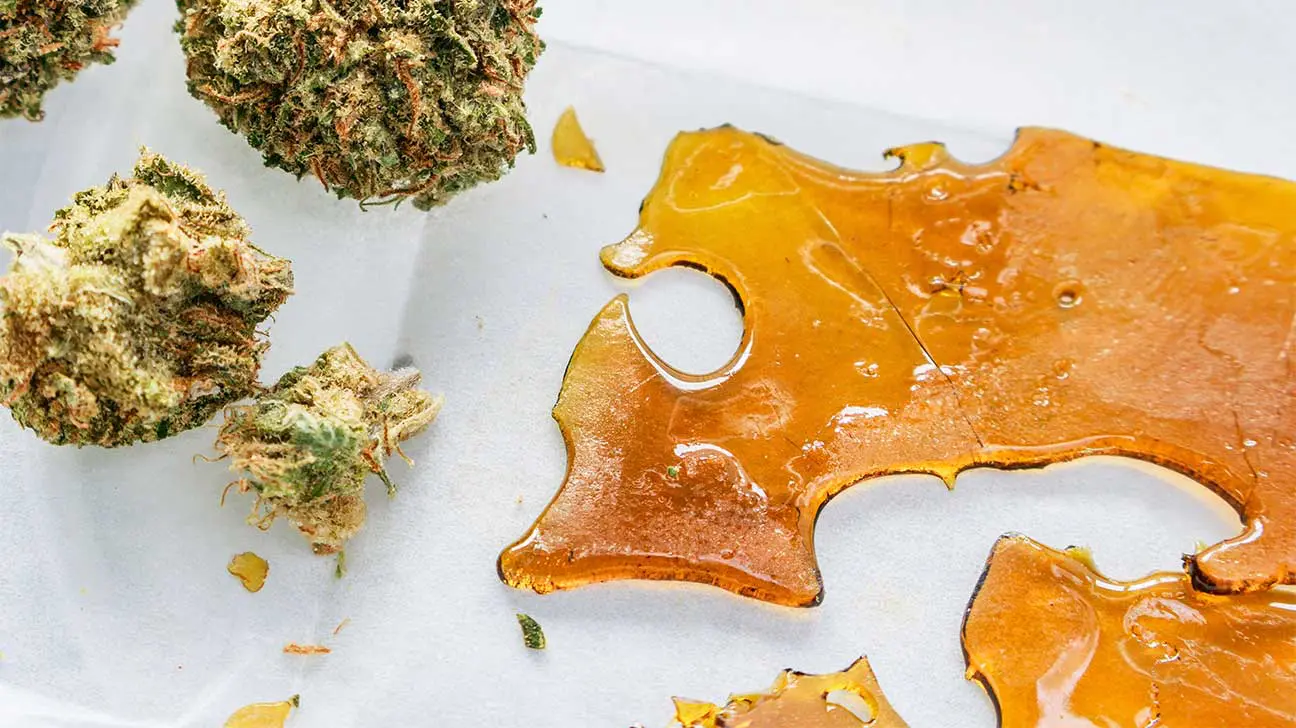
Shatter is created with extraction methods using butane and other solvents such as hexane, isopropyl, or carbon dioxide to separate essential compounds such as cannabinoids and terpenes from plant material.
Shatter weed can be broken into pieces and appears glass-like in color and texture. The potent THC and other chemical compounds, such as cannabidiol (CBD), extracted from marijuana plant matter in this product produce strong euphoric and intoxicating effects.
Shatter may be used in a vaporizer, vape pen, or water pipe, a process commonly referred to as “dabbing.”
When shatter is placed on a heated surface connected to a water pipe, it produces a high potency chemically-infused vapor. When shatter is heated and inhaled in this way, it can result in lung injury and other adverse effects.
Is Shatter Addictive?
Shatter and other cannabis extracts may contain up to 90 percent of the psychoactive chemical tetrahydrocannabinol (THC), as compared to the standard marijuana flower that contains significantly less.
Addiction to marijuana depends on the personality of the individual who uses the drug and other factors, such as co-occurring substance use disorder or mental disorder.
Most research on marijuana addiction reveals that the drug rarely produces tolerance and withdrawal. However, the marijuana products and extracts currently available are more potent, containing higher levels of THC.
Recent studies have shown that chronic marijuana users may develop tolerance and experience withdrawal symptoms when quitting smoking the drug. Like marijuana flower and other cannabis products, Shatter may lead to dependency and addiction.
Is Shatter Dangerous?
Like other illegal drugs, butane hash oil (BHO) production may be produced in home labs capable of combusting and causing injuries or even fatalities.
When shatter is purchased on the street, it often comes from labs where it is not made safely or properly.
During the extraction process, when the drug is produced in home laboratories, butane gas from the extract is removed by heating the mixture.
If it is not heated correctly, excess amounts of butane may remain. Butane is an extremely toxic chemical that is not safe for consumption.
In states where medical marijuana use is legalized and regulated, such as Colorado, cannabis concentrates sold from a dispensary may be safer and contain lower levels of butane.
Because Shatter is stronger and more concentrated than the regular marijuana flower, a small amount of the drug produces stronger effects.
When Shatter is used to produce edible products, extremely high concentrations of THC may result in short-term poisoning when ingested.
While the risk of overdose is low, other adverse side effects may occur in cases where large amounts of THC are consumed.
Side Effects Of Shatter
Marijuana acts as a central nervous system depressant and may cause cognitive impairment or worsen symptoms of mental health conditions.
While the side effects of Shatter are currently unknown, due to its increased potency of cannabinoids and terpene contents, it may produce stronger effects than standard cannabis flower.
Side effects of marijuana may include:
- headaches
- dizziness and lightheadedness
- low blood pressure
- fatigue
- nausea
- disorientation
- hallucinations
- increased heart rate
Cannabis concentrates may cause mood fluctuations, leading an individual to feel fearful, anxious, or panicked.
Due to Shatter’s effect on the brain, individuals may feel weak, have trouble concentrating or remembering events, and experience a loss of coordination.
Some possible side effects of Shatter include:
- increased heart rate
- high or low blood pressure
- upper-respiratory infections
- inflammation of respiratory airways
- sore throat
- weakened immune system
Shatter Withdrawal Symptoms
Heavy use of Shatter can alter normal brain chemistry and can cause issues within the brain’s communication system. The THC contained in marijuana products is structurally similar to anandamide, which is produced naturally in the brain.
THC may alter the function of parts of the brain that enable people to learn, form new memories, and shift focus from one thing to another.
These changes may occur due to how Shatter and other marijuana products act on the brain’s cannabinoid receptors, also known as the endocannabinoid system.
While Shatter may not produce as strong physical withdrawal symptoms as other illegal substances, it may cause mild withdrawal symptoms when an individual stops using the drug.
Possible withdrawal symptoms of marijuana concentrate include:
- feeling fearful, uneasy, and anxious
- feeling excited, tense, confused, or irritable
- difficulty falling or staying asleep
A person who habitually uses marijuana extracts may develop chemical tolerance to the drug and require more of it to obtain the desired effect. This condition may occur when the brain and body adapt to the presence of active chemicals introduced by marijuana consumption.
For individuals who develop a psychological and physical dependency to Shatter, they may experience urges to continue using the drug. Further, they may believe they need it to get through daily life.
Treatment For Shatter Addiction
People who use Shatter over long periods of time may develop a chemical and physical dependency, addiction, and withdrawal symptoms when stopping the use of the drug.
When an individual habitually uses Shatter or other marijuana concentrates and continues to use the drugs in spite of experiencing adverse side effects, substance abuse treatment is recommended.
Addiction treatment provides necessary medical and psychological services to support an individual as they recover from substance abuse. A combination of detoxification and behavioral therapies can help an individual break their dependence on Shatter.
If you or a loved one are battling Shatter addiction, please connect with our treatment center through our helpline today.
Addiction Resource aims to provide only the most current, accurate information in regards to addiction and addiction treatment, which means we only reference the most credible sources available.
These include peer-reviewed journals, government entities and academic institutions, and leaders in addiction healthcare and advocacy. Learn more about how we safeguard our content by viewing our editorial policy.
- Mayo Clinic — Marijuana
https://www.mayoclinic.org/drugs-supplements-marijuana/art-20364974 - National Center for Biotechnology Information — Butane hash oil and dabbing: insights into use, amateur production techniques, and potential harm mitigation
https://www.ncbi.nlm.nih.gov/pmc/articles/PMC6220730/ - National Center for Biotechnology Information — Characterizing marijuana concentrate users: A web-based survey
https://www.ncbi.nlm.nih.gov/pmc/articles/PMC5567791/ - National Center for Biotechnology Information — Lung injury from inhaling butane hash oil mimics pneumonia
https://www.ncbi.nlm.nih.gov/pmc/articles/PMC6327978/