

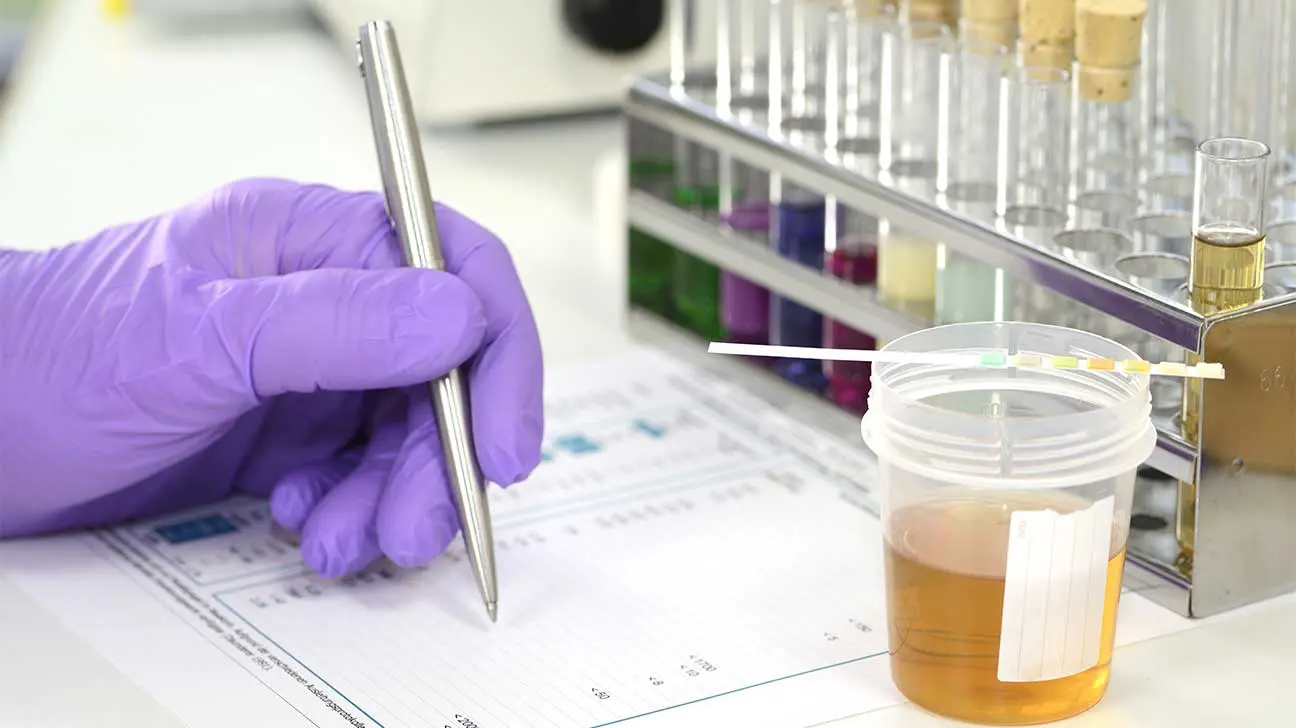
Oxycodone is a medication that is legally prescribed for pain relief and can be detected in urine for up to four days.
How long oxycodone stays in the urine may be affected by several factors.
People may be tested for oxycodone use to assess for drug abuse tendencies, and urine tests are often some of the fastest drug tests available.
How Long Can Oxycodone Be Detected In Urine?
On average, oxycodone can be detected through a urine screening for between one to four days after the last dose. This time frame, however, can change based on a number of factors.
What Factors Can Affect Urine Detection Time For Oxycodone?
The detection window for a drug refers to the amount of time drug use can be found, identified, and caught by a drug test.
Urine is the most frequently used test for prescription opioids like oxycodone. Urine tests for this prescription drug mainly screen for oxymorphone, a metabolite of oxycodone.
This drug can stay in or leave the system faster in some people than in others.
Several factors can influence how long oxycodone stays in the body including:
- age
- gender
- body mass, body fat, and weight
- liver and kidney function
- metabolism rate
- other medications
How long the drug has been taken will also influence how long oxycodone stays in the body. Chronic use is a sign of oxycodone addiction.
What Are Opioid Urine Drug Tests Used For?
Drug testing is a common practice in certain settings like offices and factories, even for legal drugs such as oxycodone.
These tests may be used for:
- workplace safety
- drug-free workplace initiatives
- sports organizations
- legal or forensic purposes
- screening for opioid use
Drug tests can also be ordered by doctors to monitor health concerns or check on individuals showing signs of abuse or addiction.
Physicians may order a urine test for their patients who are taking oxycodone to check on the amount that is in the patient’s system.
Finding Addiction Treatment For Oxycodone Abuse
If you think you or a loved one has an oxycodone addiction, don’t wait. It’s never too early or too late to seek help.
Call our helpline today to learn more about the dangers of oxycodone drug abuse and how to find opioid addiction treatment programs for yourself or a loved one.
Addiction Resource aims to provide only the most current, accurate information in regards to addiction and addiction treatment, which means we only reference the most credible sources available.
These include peer-reviewed journals, government entities and academic institutions, and leaders in addiction healthcare and advocacy. Learn more about how we safeguard our content by viewing our editorial policy.
- National Institutes of Health — Oxycodone Uses
https://www.ncbi.nlm.nih.gov/pmc/articles/PMC4018705/ - U.S. National Library of Medicine: MedlinePlus — Opioid Urine Testing
https://medlineplus.gov/lab-tests/drug-testing/ - U.S. National Library of Medicine: MedlinePlus — Symptoms of Withdrawal
https://medlineplus.gov/ency/article/000949.htm - National Library of Medicine — Half-Life of Oxycodone
https://pubmed.ncbi.nlm.nih.gov/17525040/