

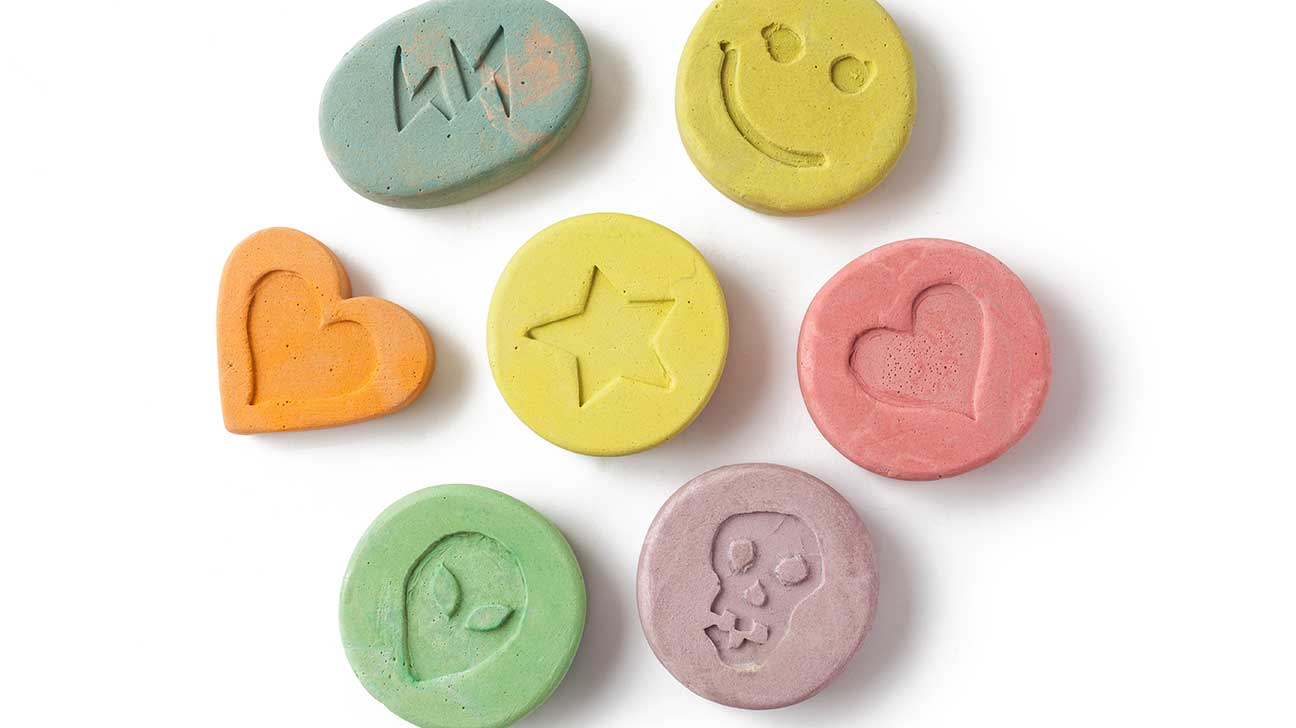
Molly, also known as MDMA or ecstasy, can look very different depending on how it’s made and sold on the illegal drug market. This popular party drug comes in various forms, colors, and shapes, making it difficult for users to know exactly what they’re taking.
The unpredictable appearance of molly reflects a major safety concern. Since it’s produced in illegal labs without regulation, users never know what they’re actually getting. What looks like pure MDMA could contain anything from harmless fillers to deadly substances like fentanyl. This uncertainty makes every use of molly a potentially dangerous gamble.
What Molly (MDMA) Pills Look Like
Many ecstasy pills have a range of different colors like pink, green, purple, and blue. Some pills are molded into diamond shapes, stamped with “branded” names, or into the likeness of cartoon characters like SpongeBob SquarePants. The appearance of molly pills may indicate the level of MDMA or other drugs present in the pill. This knowledge is passed by word-of-mouth and through web forums.
What Molly (MDMA) Powder Looks Like
As a powder, MDMA comes in a grey or white crystalline form. Most people take molly orally in pill form.
Why Does The Appearance Of Molly Matter?
Many illegal molly pills are cut with a range of stimulants, hallucinogens, and downers. The pill’s appearance or branding may communicate what is in it to some people with the correct knowledge. People without an insider’s understanding of the variety of molly’s pills are playing a risky game with this illegal drug.
Pure MDMA can lead to intense feelings of euphoria, increased energy, and sociability. However, MDMA that has been cut with unknown drugs may worsen symptoms associated with high blood pressure and breathing, alongside risks of hallucinations and panic. The variety of ways that molly appears makes it dangerous to take without risking contamination.
How To Identify Fake Or Contaminated Molly
Identifying fake or contaminated molly is extremely difficult because illegal drug producers frequently mix MDMA with other substances to increase profits or enhance effects. Even experienced users can’t reliably tell what’s in a pill or powder just by looking at it. While some people try to use appearance, taste, or smell to judge purity, these methods are unreliable since many adulterants are designed to mimic real MDMA.
Warning signs that molly may be contaminated include:
- pills or powder that taste extremely bitter or have unusual chemical tastes
- effects that feel different from previous MDMA experiences
- onset of effects much faster or slower than expected
- unusual colors, textures, or consistencies in the powder
- pills that crumble easily or have an unusual weight
- experiencing unexpected side effects like extreme paranoia, hallucinations, or breathing problems
- effects lasting much longer or shorter than typical MDMA duration
- needing much more of the substance to feel effects than usual
Even with testing, there’s no completely safe way to use street drugs since purity and contents can vary dramatically between batches. The safest approach is to avoid using molly altogether and seek professional help if you’re facing substance use.
Risks Of Ingesting Contaminated Molly
Contaminated molly poses serious health risks because users never know what dangerous substances they’re actually taking. Common adulterants include methamphetamine, bath salts, fentanyl, and other toxic chemicals that can cause heart attacks, seizures, kidney failure, and overdose. These cutting agents often create unpredictable and dangerous interactions with MDMA, leading to symptoms like extreme overheating, breathing problems, and severe psychiatric episodes including paranoia and violent behavior.
The combination of unknown substances makes contaminated molly particularly deadly because different drugs can amplify each other’s dangerous effects. Even tiny amounts of adulterants such as fentanyl can be fatal, and people may not realize they’re overdosing until it’s too late for medical help.
Treatment Programs For MDMA Abuse
People that take club drugs recreationally may become addicted to the drugs and may abuse other substances. Those with substance use disorders can get help from inpatient and outpatient treatment facilities.
Treatment services may include:
- dual diagnosis treatment
- cognitive behavioral therapy (CBT)
- dialectical behavior therapy (DBT)
- counseling
- group therapy
- medical detox
- residential treatment
- aftercare
- case management
Browse our directory or reach out to the Substance Abuse and Mental Health Services Administration (SAMHSA) for more information about addiction recovery.
Addiction Resource aims to provide only the most current, accurate information in regards to addiction and addiction treatment, which means we only reference the most credible sources available.
These include peer-reviewed journals, government entities and academic institutions, and leaders in addiction healthcare and advocacy. Learn more about how we safeguard our content by viewing our editorial policy.
- National Institute on Drug Abuse — MDMA (Ecstasy/Molly)
https://nida.nih.gov/research-topics/mdma-ecstasy-molly - United States Drug Enforcement Administration (DEA) — Ecstasy or MDMA (also known as Molly)
https://www.dea.gov/factsheets/ecstasy-or-mdma-also-known-molly