

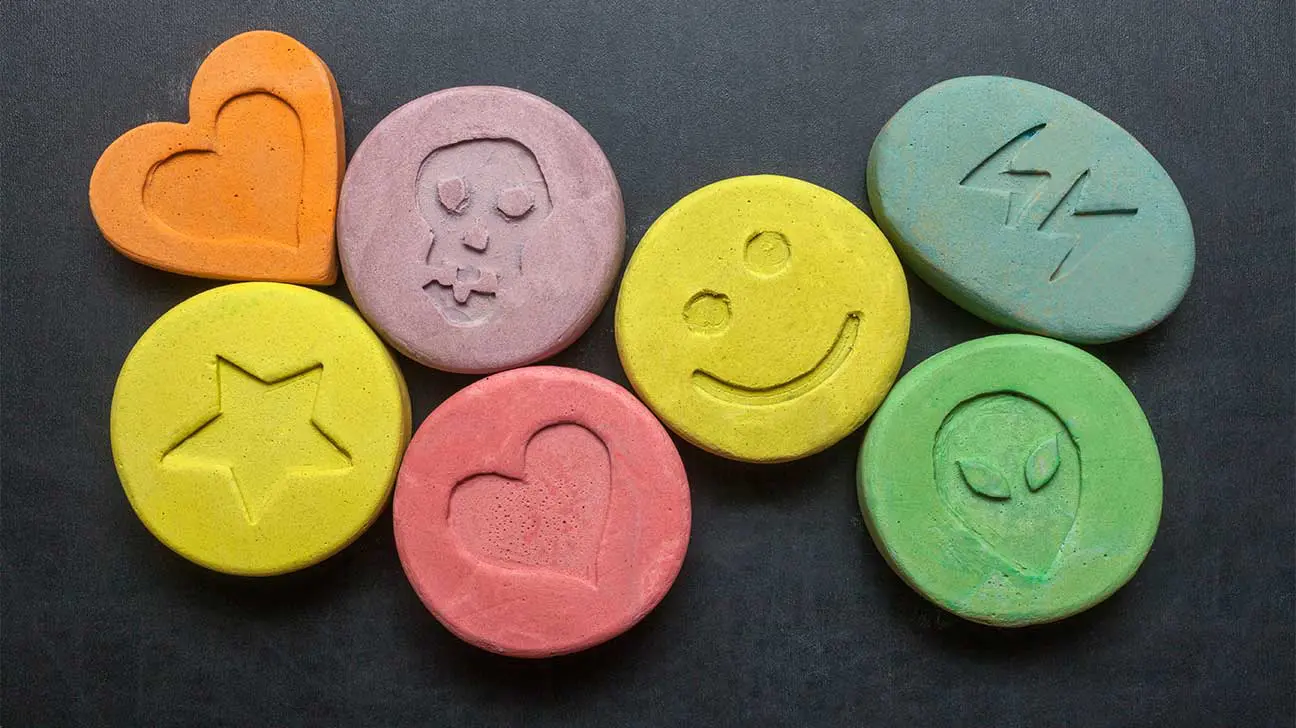
Molly is a slang term for 3,4-methylenedioxy-methamphetamine, or MDMA. This drug comes by a number of street names.
Names for molly will differ depending on whether someone is referring to molly or a molly combination drug.
Molly can come in the form of:
- colorful tablets
- capsules
- powder
- liquid
Molly is an illicit drug that is used recreationally for its hallucinogenic effects. When taken, it can produce a sense of positive well-being, emotional warmth, and have stimulant effects.
Learn more about street names for commonly abused drugs
Popular Street Names For MDMA
Molly is commonly used at parties, clubs, music venues, or for other recreational purposes.
Street names for MDMA include:
- ecstasy
- molly
- adam
- XTC
- vitamin E
- e-bomb
- sweets
- smartees
- lover’s speed
- hug drug
- peace
- eve
- beans
- biscuit
- disco biscuit
- candy
- skittles
- rolls/rolling
- running
- love drug
- essence
- blue kisses
- decadence
- doctor
- dancing shoes
- scooby snacks
- booty juice (dissolved in liquid)
Street Names For Molly With Other Drugs
Molly is sometimes mixed with other drugs. Molly combination drugs may be referred to by certain street names or slang terms.
Street names for molly mixed with other drugs:
- molly with PCP: domex
- molly with mescaline: love trip
- molly with meth: hugs and kisses, party and play (P&P)
- molly with methadone: chocolate chip cookies
Cough syrups (DXM) may also be sometimes referred to as “Poor Man’s Ecstasy” without actually containing any ecstasy.
Find Help For Molly Abuse Today
Molly is not known to be addictive. However, it can be abused in order to self-medicate, enhance certain sensations, or to manage anxiety, depression, or trauma.
If you or someone you know is abusing molly, call our helpline today to find a substance abuse treatment program that’s right for you.
Addiction Resource aims to provide only the most current, accurate information in regards to addiction and addiction treatment, which means we only reference the most credible sources available.
These include peer-reviewed journals, government entities and academic institutions, and leaders in addiction healthcare and advocacy. Learn more about how we safeguard our content by viewing our editorial policy.
- U.S. Drug Enforcement Administration (DEA)—Drug Slang Code Words DEA Intelligence Report
https://www.dea.gov/sites/default/files/2018-07/DIR-020-17%20Drug%20Slang%20Code%20Words.pdf - U.S. National Institute on Drug Abuse (NIDA)—Commonly Used Drugs Charts
https://www.drugabuse.gov/drug-topics/commonly-used-drugs-charts - U.S. National Institute on Drug Abuse (NIDA)—MDMA (Ecstasy/Molly) DrugFacts
https://www.drugabuse.gov/publications/drugfacts/mdma-ecstasymolly