
Staten Island, NY, supports a variety of treatment programs for drug and alcohol addiction. The most common rehab programs are found in the residential treatment and outpatient settings.
There are also a few inpatient treatment facilities in New York that are able to assist with the withdrawal process. People with drug or alcohol addiction who feel more comfortable going to a treatment facility outside of the Staten Island borough can easily find treatment in nearby cities.
List Of Rehab Centers In Staten Island, New York
If you’re seeking treatment for a substance use disorder in Staten Island, NY, our team of specialists has gathered a list of the best treatment programs to help you in your search.
We’ve chosen the following treatment programs based on their high quality of care.
A few of these features include:
- accreditation
- certification
- licensure
- high Google rating
- other criteria
1. Camelot, Staten Island, New York
Camelot is an outpatient rehab and residential treatment center for children, adolescents, adults, and families with locations in 5 boroughs in New York.
The focus of counseling and treatment here is to explore the attitudes and beliefs that have led clients to addiction.
Trusted features:
- state licensure
- evidence-based treatment
- non-profit status
Levels of care:
- inpatient detox
- residential treatment
- medication-assisted treatment
Treatment services:
- naltrexone treatment
- buprenorphine treatment
- anger management
- 12-step recovery groups
- mental health treatment
- relapse prevention
- motivational interviewing (MI)
- cognitive behavioral therapy (CBT)
- Matrix Model
Payment options:
- self-pay
- government funding
- state health insurance
Location and contact information:
460 H Brielle Ave.
Staten Island, NY 10314
(718) 412-3155
2. South Beach Addiction Treatment Center, Staten Island, New York
The South Beach Addiction Treatment Center is accredited for short-term residential treatment and counseling for co-occurring disorders.
South Beach offers all of their addiction services on a sliding-fee scale. This treatment center provides housing services, peer support, and case management services to clients who will soon be transitioning out of the program.
Trusted features:
- Commission on Accreditation of Rehabilitation Facilities (CARF) accreditation
- state licensure
- evidence-based treatment
Levels of care:
- residential treatment
- medication-assisted treatment (MAT)
Treatment services:
- naltrexone treatment
- buprenorphine treatment
- cognitive behavioral therapy (CBT)
- 12-step recovery groups
- motivational interviewing (MI)
- trauma-informed therapy
- relapse prevention
- telehealth
- peer recovery support
- sober living
- individual therapy
- group therapy
- family therapy
- case management
- mental health treatment
- transportation assistance
Payment options:
- Medicaid
- private health insurance
- state health insurance
- self-pay
Location and contact information:
777 Seaview Ave.
2nd Flr.
South Beach Psychiatric Center
Bldg. 3
Staten Island, NY 10305
(718) 667-2867
3. Richmond University Medical Center, Staten Island, New York
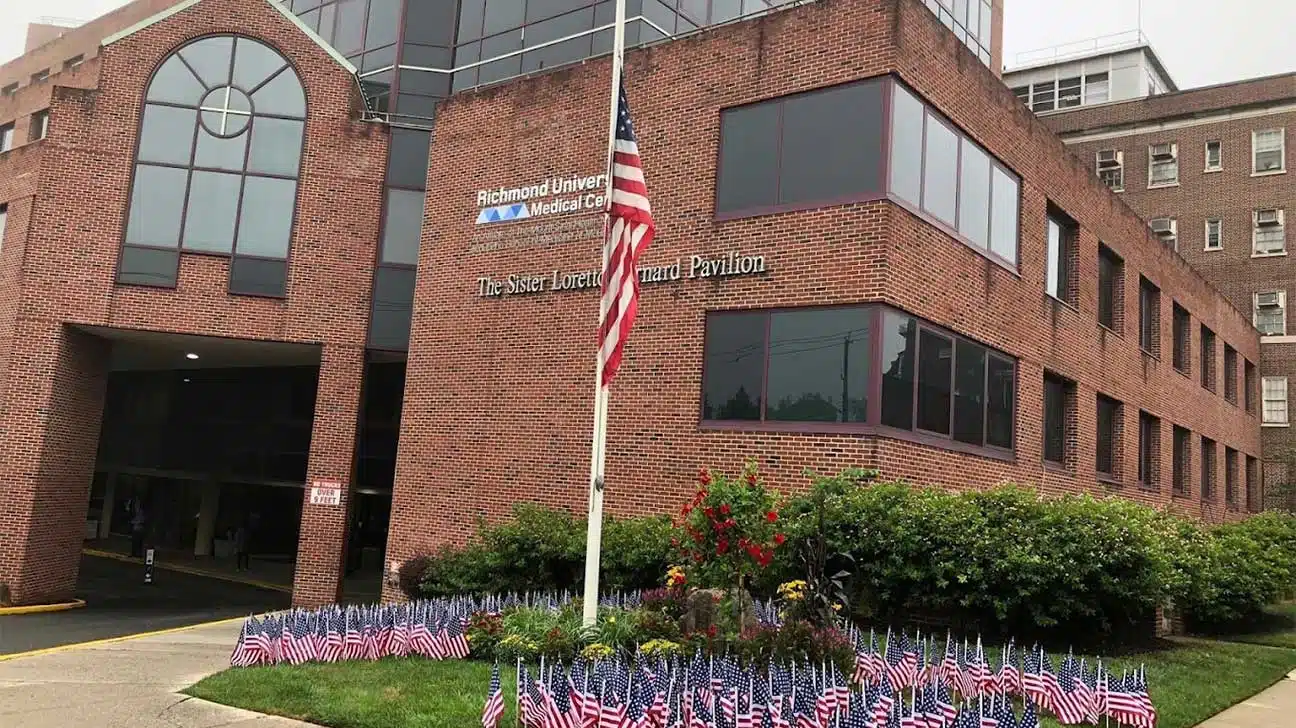
The Richmond University Medical Center has a special behavioral health unit, which provides drug and alcohol treatment and psychiatric services for children, adolescents, and adults.
Richmond University Medical Center is a Federally Qualified Health Center (FQHC).
Trusted features:
- evidence-based treatment
- non-profit status
Levels of care:
- outpatient program (OP)
Treatment services:
- individual therapy
- group therapy
- family therapy
- cognitive behavioral therapy (CBT)
- dialectical behavior therapy (DBT)
- mental health treatment
- co-occurring disorder treatment
Payment options:
- Medicaid
- Medicare
- private health insurance
- self-pay
Location and contact information:
444 Saint Mark’s Pl.
Staten Island, NY 10314
(718) 818-5557
4. Staten Island University Hospital, Staten Island, New York
The Staten Island University Hospital is a teaching hospital with 668 beds. Positioned on a 17-acre lot, with two campuses, one of which houses the addiction center.
By separating it this way, it allows them to have plenty of room to provide their patients with inpatient treatment and drug and alcohol detox services for all types of substance abuse.
Trusted features:
- Joint Commission accreditation
- state licensure
- non-profit status
Levels of care:
- detoxification
- residential treatment
- outpatient program (OP)
Treatment services:
- cognitive behavioral therapy (CBT)
- trauma-informed therapy
- relapse prevention
- motivational interviewing (MI)
- telehealth
- case management
- transportation assistance
- individual therapy
- group therapy
- family therapy
- peer recovery support
- drug testing
Payment options:
- government funding
- Medicaid
- Medicare
- TRICARE
- private health insurance
- self-pay
Location and contact information:
450 Seaview Ave.
Staten Island, NY 10305
(718) 226-2752
Substance Abuse Rates In Staten Island
Staten Island, and other New York boroughs, see high rates of drug and alcohol abuse, which can lead to addiction, overdose, and other unwanted effects:
- In 2019, drug overdoses in Staten Island decreased by 35%.
- In 2018, there were 55 drug overdose deaths. The next year, there were only 37.
- In 2010, 65% of opioid overdose deaths involved a prescription drug. According to Staten Island Live, this number decreased to 18% by 2018.
Find Addiction Treatment Today
Are you facing addiction for the first time? You can find treatment today. Call us to learn more about your treatment options.
Find addiction treatment near Staten Island, NY:
Updated on July 17, 2023
Addiction Resource aims to provide only the most current, accurate information in regards to addiction and addiction treatment, which means we only reference the most credible sources available.
These include peer-reviewed journals, government entities and academic institutions, and leaders in addiction healthcare and advocacy. Learn more about how we safeguard our content by viewing our editorial policy.
- New York Daily News—Good News for Staten Islanders: Opioid Overdose Figures, Including Fatalities, Down Trough First Six Months of 2019
https://www.nydailynews.com/new-york/ny-staten-island-opioids-20190709-5zz5gnmtnjgl7ahu5ml2fm7rwa-story.html - Staten Island USA—Substance Abuse Crisis
https://www.statenislandusa.com/substanceabuse.html - Staten Island District Attorney—Anti-Drug Initiatives
https://www.statenislandda.org/our-efforts/ - Staten Island Live—A Decade of Death: How the Drug Crisis Devastated S.I. in the 2010s; But There’s Hope Ahead
https://www.silive.com/news/2019/12/a-decade-of-death-how-the-drug-crisis-devastated-si-in-the-2010s-but-theres-hope-ahead.html