

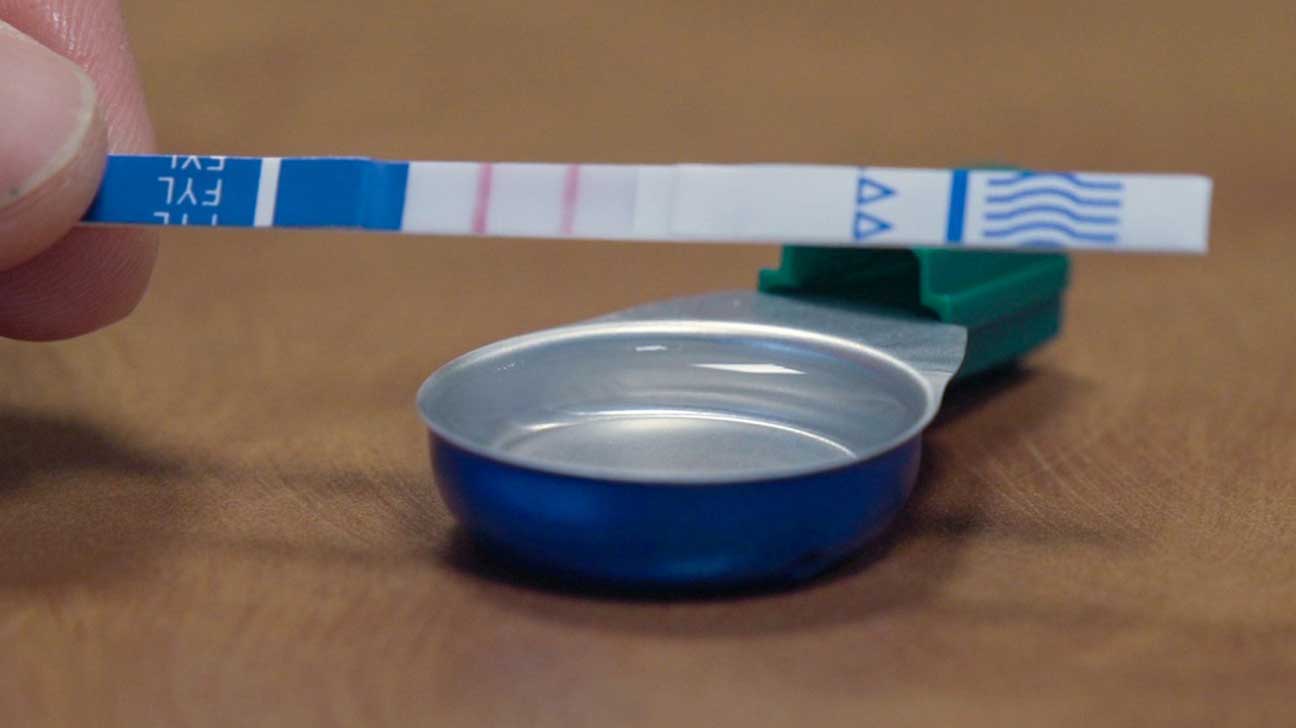
Fentanyl test strips (FTS) are a form of drug-checking technology that can check drugs for the presence of fentanyl, a synthetic opioid, involved in over half of all U.S. drug overdose deaths.
Last year, the U.S. opioid crisis saw its deadliest year for drug overdose on record—more than 93,000 overdose deaths across the country, up from about 70,400 fatal overdoses in 2019.
Yet, despite evidence that fentanyl test strips may help to save lives, there are only a few states in the U.S. where fentanyl testing strips are legal or otherwise decriminalized.
Across much of the United States, fentanyl testing strips are banned for use, due to being classified by law as “drug paraphernalia.”
Why Are Fentanyl Testing Strips Considered Paraphernalia?
Paraphernalia is generally defined as something that is used for a particular activity, such as substance use.
But the reason why testing equipment—such as FTS—is considered a form of paraphernalia largely depends on how it’s defined according to state law.
In Florida, for instance, drug paraphernalia is defined as any equipment, product, or material that can be used for “testing” controlled substances, such as fentanyl.
And many states—including states like Massachusetts, California, and Alabama—have identical or near-identical language within their own drug abuse and prevention statutes.
What Can Fentanyl Testing Strips Do?
Essentially, these strips can test drugs for the presence of fentanyl. Strips manufactured by BTNX Inc, a Canadian biotech company, can detect fentanyl and at least 10 fentanyl analogs.
They work similar to an at-home pregnancy test and require that a person dissolves the substance they plan to ingest in water. Strips can then be placed in this water and test for fentanyl.
With fentanyl contamination driving a surge in opioid overdose deaths, from contaminated street drugs like methamphetamine and heroin, identifying fentanyl in a substance can help reduce the risk of overdose.
Fentanyl is about 50 times more potent than heroin. Even a small amount can quickly lead to overdose, especially when mixed with other drugs or if taken by someone with low tolerance.
Why Fentanyl Test Strips Remain Controversial
Fentanyl test strips are widely described as a harm reduction method or harm reduction strategy, meaning they are a tool that can help reduce or mitigate harm posed by drug use.
Other harm reduction strategies include the distribution of naloxone—or Narcan, an opioid overdose reversal drug—as well as syringe exchange programs and safe injection sites.
Yet, while there’s evidence that shows certain harm reduction methods can help prevent the transmission of infectious diseases and even save lives, not everyone is in agreement that they should be uplifted or decriminalized.
Who Opposes Fentanyl Test Strips?
Opponents to drug checking technologies and other harm reduction methods say that this approach encourages illicit drug use, as it does not require that a person stops using drugs.
That is, opponents argue that uplifting harm reduction strategies would worsen, rather than solve, widespread drug abuse and addiction.
However, this argument is contrary to the overwhelming evidence that demonstrates this is not the case.
In the case of FTS, research shows this drug checking technology is safe, easy to use, and can be effectively utilized as a non-invasive, non-punitive tool for drug overdose prevention.
Who Supports Fentanyl Test Strips?
Although it wasn’t always so, the use of FTS as a tool for overdose prevention is now backed by federal agencies, as well as many public health experts, and other health organizations.
Agencies and organizations that now support the use of FTS for specific purposes include:
- the Substance Abuse and Mental Health Services Administration (SAMHSA)
- the U.S. National Institute on Drug Abuse (NIDA)
- the U.S. Centers for Disease Control and Prevention (CDC)
- and other drug policy, healthcare, and advocacy organizations
As of April 2021, for instance, federal funding can now be used to purchase FTS for clinical, research, or public health purposes, according to an announcement from the CDC and SAMHSA.
Yet, with legal barriers remaining, the distribution of FTS is still not technically legal in most states, although experts say that drug laws banning drug testing equipment are rarely enforced.
Which States Ban Fentanyl Test Strips?
According to the Legislative Analysis and Public Policy Association (LAPPA), fentanyl test strips are classified as “drug paraphernalia” in most states.
This can make the use, possession, and distribution of fentanyl test strips, outside of certain settings, subject to criminal penalties. Essentially, they are *banned in the following states.
States that classify FTS as drug paraphernalia include:
- Alabama
- Arkansas
- **California
- **Connecticut
- Florida
- Georgia
- Hawaii
- Idaho
- Illinois
- Indiana
- Iowa
- Kentucky
- Louisiana
- **Maine
- Michigan
- Mississippi
- Missouri
- Montana
- New Hampshire
- **New Jersey
- North Carolina
- North Dakota
- **Ohio
- Oklahoma
- Oregon
- Pennsylvania
- South Dakota
- Tennessee
- **Texas
- *Utah
- Vermont
- *Washington
*Despite this ban, some states have approved FTS distribution programs that allow certain entities, such as harm reduction organizations, to legally distribute FTS.
** These states have FTS distribution programs, despite still legally classifying FTS as banned drug paraphernalia.
Exceptions To Blanket Bans On Fentanyl Test Strips
North Dakota and Vermont both have state laws that classify FTS as a type of drug paraphernalia.
However, they both specifically permit the use of FTS by harm reduction programs.
States Where Fentanyl Test Strips Are Decriminalized Or Legal
Several states have drug laws that either do not classify testing technologies as drug paraphernalia, or otherwise specifically exclude FTS from the drug paraphernalia definition.
States/territories where fentanyl test strips are legal or decriminalized include:
- *Alaska
- Colorado
- Maryland
- Nebraska
- New York
- South Carolina
- Virginia
- Washington D.C
- Wyoming
*Alaska does not contain a drug law that defines drug paraphernalia or punishes the manufacturing, use, or possession of it.
States Where Legislation Is Pending To Legalize Fentanyl Test Strips
According to LAPPA, 10 states currently have bills in their state legislatures that would either remove FTS from the definition of “drug paraphernalia” or otherwise allow its use.
These 10 states include:
- Arizona
- Delaware
- Kansas
- Maine
- Massachusetts
- Minnesota
- Nevada
- New Mexico
- West Virginia
- Wisconsin
Potential Benefits Of Fentanyl Test Strips
Tens of thousands of people die due to drug overdose each year, as a result of excessive fentanyl use or the use of fentanyl mixed with other drugs.
Illicit drugs like meth, for instance, may contain traces of fentanyl that are sold to people without their knowledge; that is, they may not be aware that the drugs they bought contain fentanyl.
Testing strips, therefore, can help inform and empower people who use drugs to be aware of the presence of fentanyl and fentanyl analogues in their drug supply.
The strips are also inexpensive, at about $1 per strip.
Fentanyl Test Strips May Help Prevent Fentanyl Overdose
Furthermore, there’s research that shows that people who use these rapid testing strips, and get a positive test result, are more likely to use harm reduction strategies that can prevent overdose.
This includes actions such as:
- throwing out their batch
- making sure they’re not using drugs alone
- using their drugs more slowly
- using less of the drug containing fentanyl
While this doesn’t by itself stop a person from using drugs, it can prevent fatal overdose—and the devastation that that can leave for loved ones in its wake.
When acquired through a harm reduction program, access to FTS can also connect people with drug addiction to addiction treatment or social services.
Getting Help For A Drug Addiction
Millions of people in the United States struggle with some form of substance abuse or addiction. Without seeking help, this problem can be debilitating and life-threatening.
For more information about drug addiction treatment, and how to find treatment options near you, call our helpline today to connect with a trained addiction specialist.
Addiction Resource aims to provide only the most current, accurate information in regards to addiction and addiction treatment, which means we only reference the most credible sources available.
These include peer-reviewed journals, government entities and academic institutions, and leaders in addiction healthcare and advocacy. Learn more about how we safeguard our content by viewing our editorial policy.
- Centers for Disease Control and Prevention (CDC) — Provisional Drug Overdose Data
https://www.cdc.gov/nchs/nvss/vsrr/drug-overdose-data.htm - Florida Legislature — The 2021 Florida Statutes
http://www.leg.state.fl.us/Statutes/index.cfm?App_mode=Display_Statute&URL=0800-0899/0893/Sections/0893.145.html - Health Affairs — Fentanyl Test Strips Empower People And Save Lives—So Why Aren’t They More Widespread?
https://www.healthaffairs.org/doi/10.1377/hblog20210601.974263 - Legislative Analysis and Public Policy Association — Fentanyl Test Strips (May 2021)
https://legislativeanalysis.org/wp-content/uploads/2021/05/Fentanyl-Teststrips-FINAL-1.pdf - Prevent Overdose Rhode Island — Fentanyl Test Strips
https://harmreduction.org/issues/fentanyl/ - U.S. National Library of Medicine: NCBI.gov — Use of Rapid Fentanyl Test Strips Among Young Adults Who Use Drugs
https://pubmed.ncbi.nlm.nih.gov/30344005/