
Americans reportedly spend more on prescription drugs than any other country in the world.
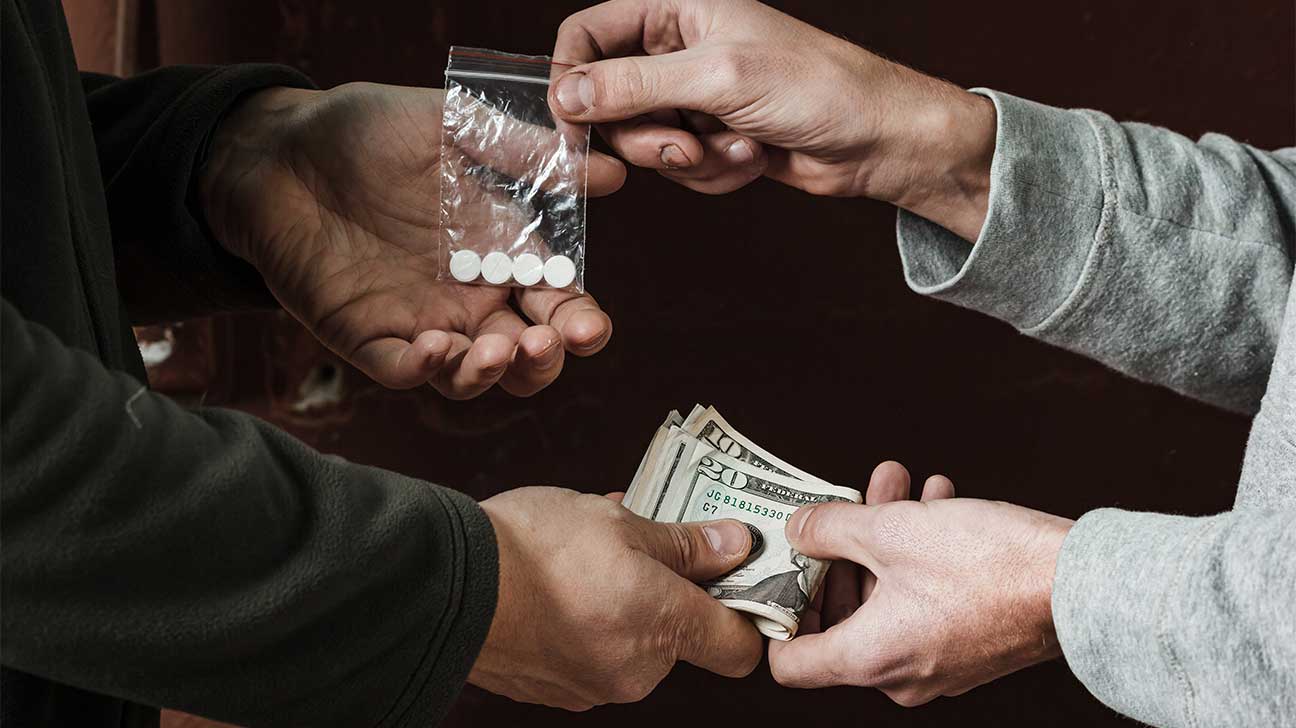
Some people may try to get around steep drug prices by buying prescription drugs through the illicit market.
According to the National Insitute on Drug Abuse (NIDA), more than 14 million people misused prescription medications in 2021. This includes prescription drugs bought through legal and illicit channels.
The average cost of prescription drugs resold on the street can vary, based on the type of drug, the strength, and market availability among other factors.
Opioids (Opiates)
Opioids are a class of addictive painkillers. The cost of opiates bought on the street will depend on the type of opiate, the strength (dosage), and other factors.
Street prices for opioids will generally be cheaper than prescription drug prices without insurance, although this may depend on the formulation, type of drug, and strength.
Demerol (Meperidine)
Demerol, the brand name for meperidine, is a prescription opioid with an abuse potential that’s similar to morphine. The estimated street price for Demerol is $2 to $6 a dose.
Dilaudid (Hydromorphone)
Dilaudid is the brand name for hydromorphone, a semi-synthetic opioid drug. The cost of Dilaudid bought and sold on the street is $2 to $150 per tablet, depending on the strength.
Fentanyl
Fentanyl is a synthetic and highly potent opioid drug that can be prescribed or illegally manufactured to be sold on the street.
The average street price of fentanyl is $25 to $40 per tablet, lozenge, or patch. People who purchase the powdered form of fentanyl can expect to pay up to $200 per gram.
Morphine
Morphine is a naturally occurring opiate drug. The street price of morphine can range from $5 to $30 in pill form or up to $80 for the liquid formulation.
Oxycodone (OxyContin)
OxyContin, or “oxy”, is a brand name for oxycodone, a prescription painkiller. The street price of oxycodone can range from $3 to $80 depending on the formulation and dosage/strength.
Five and ten-milligram tablets of Percocet are sold on the street at an average cost of $5 to $8, according to data from the Department of Justice.
Vicodin (Hydrocodone)
Vicodin (hydrocodone) is a semi-synthetic opioid drug used to treat pain. The average street price for Vicodin is about $1 per milligram.
Some estimates place the street cost of hydrocodone at $6 to $8 per tablet, depending on the formulation and strength.
Ultram (Tramadol)
Ultram is a brand name for the opioid drug, tramadol. The street price of tramadol (50mg) is $1 to $10 per tablet or approximately $0.10 to $0.14 per milligram (mg).
Benzodiazepines (Benzos)
Benzodiazepines, also known as “benzos”, are a class of central nervous system depressants commonly prescribed to treat anxiety, panic attacks, and insomnia.
The street prices for benzos can vary depending on the type of benzodiazepine drug, the dosage/strength, and local availability.
Ativan (Lorazepam)
Ativan, also known as lorazepam, is a benzodiazepine medication that is typically prescribed to treat insomnia, seizures, and anxiety disorders.
The street price of Ativan is an estimated $4 per tablet. The price of Ativan may vary depending on the dosage amount.
Klonopin (Clonazepam)
Klonopin is a brand name for clonazepam, a common benzodiazepine drug used to treat anxiety disorders. The street price of Klonopin is about $2 to $10 per tablet, depending on the dosage.
Xanax (Alprazolam)
Xanax, the brand name for alprazolam, is one of the most commonly abused benzodiazepines. The street price of Xanax is $2 to $20 per tablet, depending on the strength.
Valium (Diazepam)
Valium, the brand name for diazepam, is a benzodiazepine drug prescribed to treat anxiety and seizures. The average street price of Valium is $2 to $7 per tablet, depending on the strength (2 mg vs. 10 mg).
Amphetamines
Amphetamines are a class of prescription stimulants, or “uppers”, that are commonly used to treat attention deficit hyperactivity disorder (ADHD) and narcolepsy.
Adderall
Adderall is a prescription amphetamine used to treat ADHD and narcolepsy. the street price of Adderall is $3 to $15 per pill or capsule, depending on the strength.
Ritalin
Ritalin is a brand name for methylphenidate. Some people who engage in Ritalin abuse refer to it as the “poor man’s cocaine” due to the jolt of energy felt after injecting it.
The average street price of Ritalin is $1 to $20 per pill, depending on the strength and formulation.
Vyvanse
Vyvanse is a brand name for lisdexamfetamine, a prescription stimulant prescribed for ADHD and weight loss. The average street price of Vyvanse runs anywhere between $3 to $30 a pill.
Other Prescription Drugs
Any prescription drug can become a drug of abuse when taken in ways other than prescribed by a doctor. The cost of these drugs can vary.
Ambien
Ambien, a brand name for zolpidem, is a sedative-hypnotic typically prescribed as a sleep medication. The street price of Ambien ranges from $2 to $20 per pill.
Flexeril
Flexeril (cyclobenzaprine) is a muscle relaxant with a chemical structure similar to tricyclic antidepressants. The average street price of Flexeril is $1 to $10 per tablet.
Gabapentin
Gabapentin is a non-opioid pain reliever that can produce mild euphoric and sedative effects. The average street price of Gabapentin is $2 to $5 per pill, depending on the strength.
Trazodone
Trazodone is a serotonin modulator prescribed for depression and sleep. The average street value of trazodone varies drastically, as it is not a common drug of abuse.
The cost is typically between $1 to $15 dollars per tablet, due to the fact that it’s unlikely to cause effects typically sought by people who abuse prescription drugs, such as euphoria.
Wellbutrin (Bupropion)
Wellbutrin, also known as bupropion, is a prescription antidepressant. The average street price of Wellbutrin is $2 to $3 per 100-mg pill.
Zoloft (Sertraline)
Zoloft, also known as sertraline, is a prescription antidepressant that belongs to a class of medications known as selective serotonin reuptake inhibitors (SSRIs).
Zoloft may be bought on the street for the unprescribed use of treating depression. The average street price for Zoloft is likely to be less than $1 per pill.
Zopiclone (Imovane)
Zopiclone, also sold as Imovane, is a sedative-hypnotic similar to Ambien (zolpidem). The street price of zopiclone can run up to $1 per tablet.
Why Do People Buy Prescription Drugs Through The Black Market?
More people are turning to illicit markets to purchase prescription drugs. One question loved ones of people with substance use disorders ask is: Why?
The answer is that this decision may be influenced by a variety of factors, including cost, drug effects, ease of getting a prescription, and prescription drug addiction.
Cost Of Prescription Drugs
Cost and affordability are some of the major reasons people in the United States turn to the black market for prescription medications, according to some researchers.
However, even when buying prescription drugs for legitimate reasons, such as pain relief, using a medication without a prescription can come with risks, such as developing an addiction or drug overdose.
Effects Of Prescription Drugs
Prescription drugs can sometimes be abused for side effects, such as euphoria, sedation, pain relief, or other stimulating effects that can produce a rush of energy.
Drug Purchasing Sizes: How Are Prescription Drugs Sold On The Street?
Most prescription drugs are resold in their original form.
While many of these drugs come in pill or tablet form, this can also refer to liquid solutions, lozenges, patches, films, or powders.
Common purchasing sizes for prescription drugs sold on the street:
- single doses
- bottles
- drug packages
- per gram
- milliliters (mL)
The unit size for purchasing prescription drugs can vary depending on availability, the type of drug, and how much a person is willing to spend.
What Factors Can Affect The Cost Of Prescription Drugs Sold On The Street?
Much like prescription drugs acquired through a pharmacy, the street value of drugs can rise and fall over time depending on a wide range of factors.
Factors that can affect how much prescription drugs cost on the street include:
- street drug supply and demand
- ease of acquisition
- dosage/strength
- behavioral health care mental health care affordability
- average price of illicit drugs in the area
- drug law enforcement
- availability of services such as methadone and buprenorphine treatment
- geographic location (Canada, America, Europe)
Some prescription drugs are easier to acquire than others. For example, some states have cracked down on opioid prescribing, and prescription opioids have become more difficult to acquire.
The demand for a certain drug, as well as the process of acquiring prescription drugs to resell on the street, can affect how much the drug will cost.
Find Addiction Treatment For Prescription Drug Use Today
Finding substance abuse can be stressful, but help is available. Reach out to AddictionResource.net today for more information about substance use treatment options.
Overcoming a prescription drug problem is possible with treatment. Call our helpline today to find a prescription drug abuse treatment program that’s right for you.
Addiction Resource aims to provide only the most current, accurate information in regards to addiction and addiction treatment, which means we only reference the most credible sources available.
These include peer-reviewed journals, government entities and academic institutions, and leaders in addiction healthcare and advocacy. Learn more about how we safeguard our content by viewing our editorial policy.
- Bloomberg—Drug Prices: Quick Take
https://www.bloomberg.com/quicktake/drug-prices - Connecticut Department of Consumer Protection (DCP)—Drug Control Division
https://portal.ct.gov/DCP/Drug-Control-Division/Drug-Control/ - StreetRX—USA Latest Street Prices for Prescription Drugs
https://streetrx.com/ - Substance Abuse and Mental Health Services Administration (SAMHSA)—Key Substance Use and Mental Health Indicators in the U.S. 2019 NSDUH Findings
https://www.samhsa.gov/data/sites/default/files/reports/rpt29393/2019NSDUHFFRPDFWHTML/2019NSDUHFFR1PDFW090120.pdf - The Journal of Pain—Street prices of prescription opioids diverted to the illicit market: data from a national surveillance program
https://www.jpain.org/article/S1526-5900(13)00492-6/fulltext